Featured recent works:

Machine Spectre for Chamber Orchestra & Electronics

Performed by Alarm Will Sound

Machine Spectre for chamber orchestra and electronics meditates on the material vitality and fallibility of technological devices. The piece unfolds as a complex assemblage of myriad sonic histories, inter-material identities and fragmented interwoven selfhoods. Its poly-temporal musical body is made up of bits and pieces of technological sounds from the past, present and future as well as earthly sounds of acoustic instruments and human performers - hence, giving it a cyborgian identity. While the material nature of technology is often overlooked, computers, smartphones, etc. are made up of countless raw materials that are extracted from the earth; Plastic, is derived from cellulose, coal, and crude oil amongst numerous other things, and microprocessors are comprised of copper, cobalt, iron, and quartz, as well as dozens more elements. Machine Spectre imagines a musical cyborg where the spectre of these earthly organic materials are animate and autonomous. The “illegitimate offspring” of its technological origins, origins which it is “exceedingly unfaithful to” (Haraway), this cyborgian being is in a constant state of chaotic emergence, seeking to re-wild itself beyond anthropocentered conceptions and towards its earthly, material genesis.

_.noocambriidæ._ for Video and 10-channel Audio

An installation / fixed multimedia composition in collaboration with Andrew Wharton 

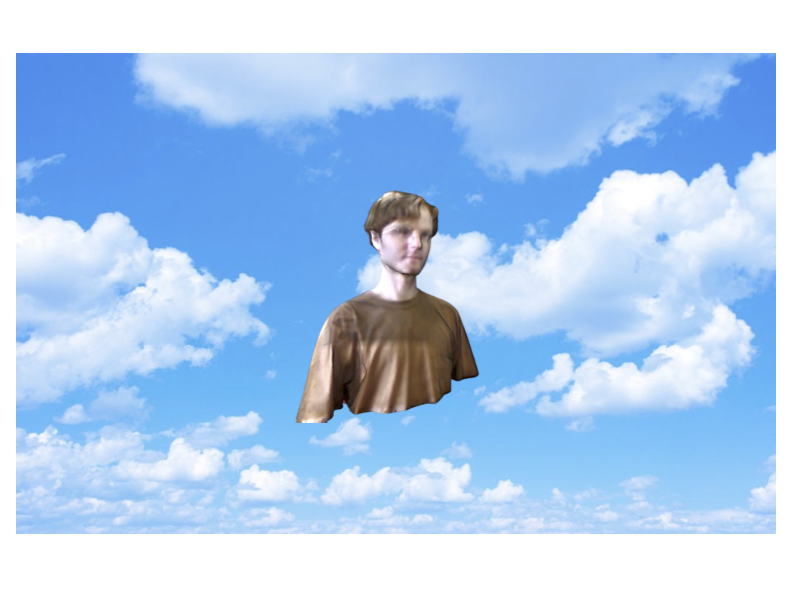
Synthetic/Organic, digital/biological, virtual/actual, noocambriidæ brings into being monstrous entities that are born out of the compost pile of the collective unconscious as it operates through cyberspace. Though the exact date and attribution are uncertain, the term ‘noosphere’ is commonly linked to Vladimir Vernadsky, Teilhard de Chardin and Edouard Le Roy, as early as the mid-1920s. This concept refers to the third stage in the earth’s development, where the emergence of human cognition will fundamentally alter the geosphere and biosphere of the earth. noocambriidæ positions the noosphere not just as an emergent field, but as a substrate where entities can come into being.  Through 3D animation and 10-channel spatialized sound, noocambriidæ acts as a nooscope into this realm of more-than-human behaviors, speculating on a second cambrian explosion of autonomous creatural forms born out of primordial cyborg potentials.

INTRA for Cello, Electronics and Lights (Live)

Performed by Robbie Bui

INTRA explores the inner life of the cello, its intersubjective entanglement with performer, and an imagined shared unconscious between Cellist and Cello. What memories, thoughts and desires does the human-material, instrument-performer entanglement hold? The piece seeks to imagine the inner world of a shared human-object intersubjectivity, and animate the Cello as an autonomous “living” subject. INTRA explores agency, absence, and presence within human / more-than-human entanglements and performer / electronic interaction. Co-mingled with the instrument, both the human body and instrumental body share a complex collective unconscious, represented by the shape-shifting shadows cast behind the performer a la the Jungian shadow (a metaphor for the subconscious). INTRA moves between a sea of dreams, memories, thoughts & emotions within this shared psychological space between instrument and performer, meditating on the performative body, the performativity of the Cello as an artifact-object, and the trauma, ecstasy, and dramatism of musical performance and traditional classical pedagogies.

𝔥𝔶𝔭𝔢𝔯-𝔪𝔢𝔪𝔬𝔯𝔶 for Amplified Ensemble & Electronics

Performed by Ensemble Palimpsest

𝔥𝔶𝔭𝔢𝔯-𝔪𝔢𝔪𝔬𝔯𝔶 is about is inspired by warped perceptions of memory and time occuring in “hyperreal” cyber spaces. The piece explores the ways in which memories are stored, transferred, transformed, and modified through the Internet and digital devices. 𝔥𝔶𝔭𝔢𝔯-𝔪𝔢𝔪𝔬𝔯𝔶 imagines the sounds of a cybernetically mutated digital fragment of the past that has taken on a ghost-like life of its own; A digital memory that can be reduced to a file or hyperlink can take on an uncanny quality, suggestive of an illusory sense that it is autonomous and immortal. Its continuous life exists as a constantly-changing entity, in a ceaseless state of re-contextualization and re-definition. The 1940 hit I’ll Never Smile Again by Ruth Lowe is a song about memory, longing, and nostalgia. In this piece, the song sample functions as a metaphor for the way the memory moves through digital devices and is distributed through virtual spheres, as it is disfigured, chopped, stretched, crushed, deconstructed and decontextualized.